
For many UK families exploring higher education in the United States, the phrase Ivy League has become synonymous with excellence and global prestige. Harvard, Yale and Princeton are among the world's most recognisable universities, and it is easy to assume that they alone represent the pinnacle of American higher education.
That perception is understandable from a UK perspective. British students are accustomed to applying within a comparatively concentrated higher education system where a relatively small number of universities occupy a prominent place in the national conversation. The US is different. Rather than a single hierarchy of institutions, it encompasses a wide range of schools, each with its own strengths, educational philosophy, and undergraduate experience.
Outside the United States, “Ivy League” has gradually become shorthand for any exceptionally prestigious American college. In reality, the term refers to a historic athletic conference comprising just eight universities in the northeastern United States.
Recognising what the Ivy League is - and what it is not - is the first step towards understanding the wider landscape of American higher education. Families that look beyond the Ivy League soon discover that it represents only one part of a far richer and more varied university system.
The Ivy League Isn't the Whole Story
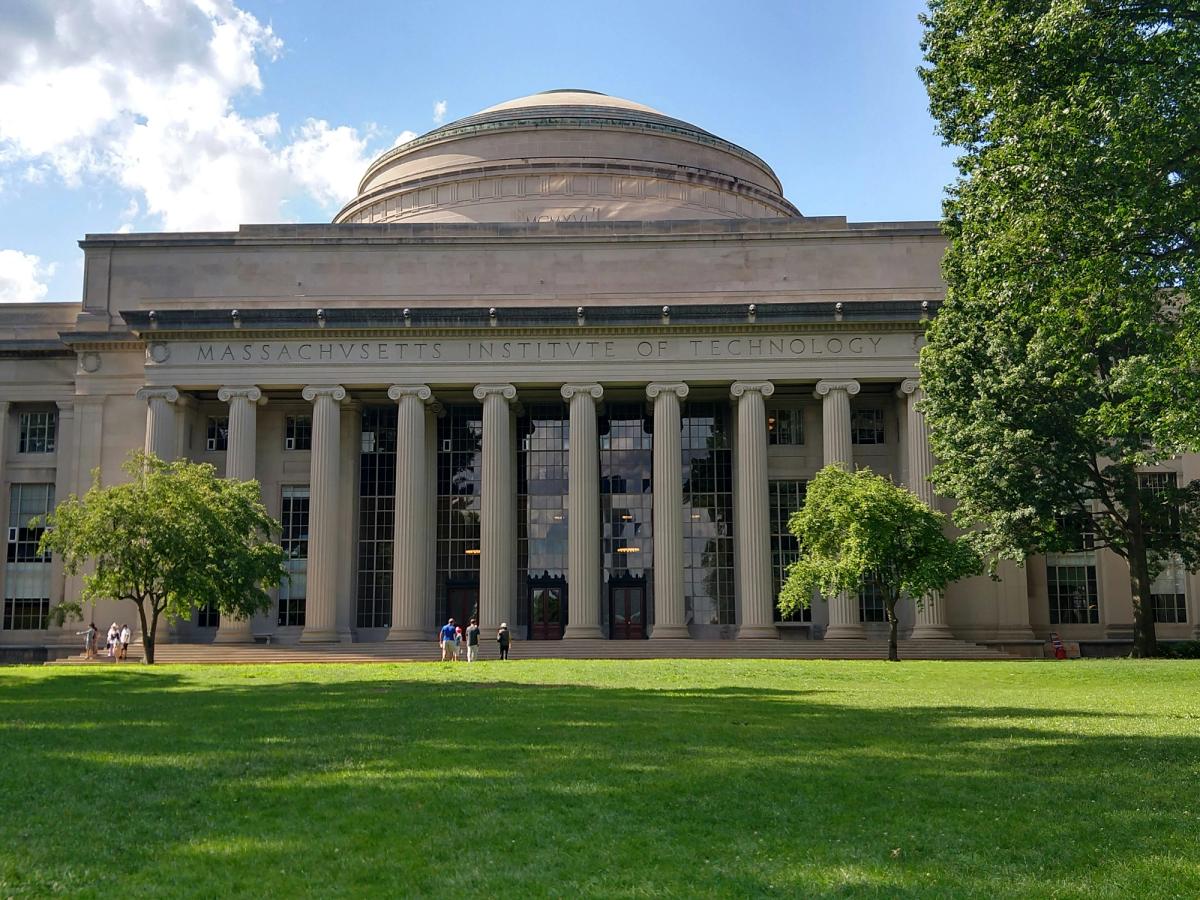
Stanford, MIT, Duke, Johns Hopkins and Northwestern are among America's most distinguished universities, yet none belongs to the Ivy League. In some fields, they are the institutions students aspire to above all others. A prospective engineer or computer scientist may naturally gravitate towards MIT. In the QS World University Rankings by Subject 2025, MIT placed first for computer science, mathematics, physics and several branches of engineering. A student passionate about robotics might look first to Carnegie Mellon, while someone hoping to pursue medicine or biomedical research may be drawn to Johns Hopkins, where most undergraduates take part in research during their degree. For economics, meanwhile, few universities have had as much influence as UChicago, whose faculty and alumni include many Nobel laureates in economics.
Nor are world-class undergraduate opportunities confined to large research universities. Some of America's most highly regarded institutions are liberal arts colleges, a category that is far less familiar outside the United States. Colleges such as Williams, Swarthmore and Amherst have undergraduate student bodies of only a few thousand, yet they are renowned for outstanding teaching, close relationships with professors, and the opportunity for undergraduates to take part in research alongside faculty. For many students, they offer a more personal undergraduate experience than even the most prestigious research universities.
The message for UK families is straightforward: the Ivy League does not have a monopoly on excellence. The strongest college for one student may not belong to the Ivy League at all. What matters is not whether a school happens to belong to the Ivy League, but whether it excels in the subjects and opportunities that matter most to your child.
There Is No Single Best Undergraduate Experience
Once families look beyond reputation alone, another important difference emerges: America's leading schools are built around very different educational philosophies. Many are major research institutions whose mission extends beyond undergraduate education to encompass postgraduate study and internationally recognised research. Liberal arts colleges take a much different approach. Built almost entirely around undergraduate education, they offer a model that is unfamiliar to many families outside the United States, but one that has long been regarded as one of the country's greatest strengths.
That undergraduate focus is reflected in the student experience. Amherst reports a 7:1 student-faculty ratio, with 86% of classes enrolling fewer than 30 students. Pomona also reports a 7:1 ratio and an average class size of 15, while Wellesley reports an 8:1 ratio and average class size of 17-20 students. Beyond the classroom, Amherst describes students working alongside faculty in small research teams. Williams emphasises opportunities for undergraduates to undertake research with faculty, alongside funded summer research. At Wellesley, undergraduates can conduct graduate-level research, co-author academic papers and present at national conferences, while at Pomona more than half of students undertake faculty-led research, with more than 200 participating each summer.
None of this is to suggest that the Ivy League or other leading research universities provide an inferior undergraduate education. Harvard's median class size is 12, while Princeton reports a 5:1 student-faculty ratio. MIT likewise emphasises undergraduate research through its Undergraduate Research Opportunities Program (UROP), while Northwestern highlights close faculty mentorship across its undergraduate programmes. The distinction is more subtle. At many of America's leading research universities, close faculty relationships and undergraduate research form part of a broader institutional mission, alongside postgraduate education and world-leading research. At the leading liberal arts colleges, those same priorities shape the institution itself.
For UK families, the lesson is an important one. Choosing a school is not simply a matter of reputation; it requires finding the educational environment in which a student will thrive. Some students excel in the energy and scale of a major research university, while others flourish in the close-knit setting of a liberal arts college. Understanding that difference is often more important than comparing rankings alone.
Choosing the Right STEM University
For students interested in science, technology, engineering and mathematics, the assumption that an Ivy League university should be the first choice is particularly misleading. Some of the world's leading STEM institutions, including MIT, Caltech, Carnegie Mellon, Stanford, Johns Hopkins and Rice, have never belonged to the Ivy League. The more useful question is not whether a university is an Ivy, but what kind of STEM education it offers.
One important distinction is the difference between opportunities that are available and opportunities that are accessible. Ivies such as Princeton, Cornell, Columbia and Penn conduct research on an extraordinary scale, giving undergraduates access to world-class laboratories, renowned faculty and cutting-edge facilities. At larger research universities, however, students may need to take greater initiative to identify supervisors, secure places in research groups, or compete for funding. For some students, the opportunity to take ownership of their research experience is part of the attraction.
Other leading STEM institutions place greater emphasis on creating structured pathways into research from the beginning of an undergraduate degree. MIT has long emphasised learning through experimentation and hands-on problem solving, encouraging undergraduates to engage in laboratory work, engineering design and research from the earliest stages of their degree, while Caltech's small size encourages close collaboration between students and faculty. Carnegie Mellon offers dedicated undergraduate research fellowships across disciplines, and Johns Hopkins reports that around 80% of its undergraduates participate in research before graduating. While institutions differ in emphasis, they share a commitment to involving undergraduates directly in research, innovation, and discovery.
Research is only one part of the picture. STEM students should also consider factors such as class size, access to laboratory facilities, project-based learning, design teams, and the university's links with industry and the wider innovation community. A student hoping to launch a technology start-up may value Stanford's proximity to Silicon Valley, while someone interested in biomedical research may be drawn to Johns Hopkins, home to one of the world's leading academic medical centres. An aspiring roboticist may find Carnegie Mellon particularly attractive, while a student seeking an intensely scientific environment may prefer Caltech or MIT. For students choosing between outstanding universities, these differences may ultimately matter more than prestige alone.
There is no single blueprint for STEM excellence. The best choice depends not on whether a university belongs to the Ivy League, but on whether its approach to STEM matches the student's interests, ambitions and preferred way of learning.
Success Comes in Many Forms
One of the most persistent assumptions about American higher education is that the Ivy League offers the surest path to long-term success. Many families worry that choosing a school outside the Ivies means sacrificing opportunities for postgraduate study, prestigious scholarships, or competitive careers. The picture is considerably more nuanced.
Outstanding outcomes are found across American higher education. Amherst reports that 80% of alumni who self-report have attended graduate or professional school. Swarthmore reports medical-school and law-school admission rates of 84% and 94% respectively, while more than one in five graduates go on to complete a doctoral degree. The National Science Foundation's National Center for Science and Engineering Statistics has likewise found that, on a per-capita basis, arts-and-sciences-focused liberal arts colleges produce science and engineering PhDs at some of the highest rates in the country.
The same pattern appears in prestigious scholarships. Williams, Swarthmore, Amherst, Stanford, MIT, Duke, UChicago, Northwestern, Rice, and Pomona all have long histories of producing Rhodes Scholars. Graduate schools, scholarship committees, and employers recognise outstanding students from universities well beyond the Ivy League. Excellence is recognised wherever it is found.
The Right Measure of Excellence
None of this diminishes the Ivy League. Harvard, Princeton, Yale, and their peers remain among the world’s finest universities, offering exceptional teaching, research opportunities, alumni networks and global reputations. They represent, however, just one part of an extraordinarily diverse higher education system in which many outstanding universities and liberal arts colleges may offer a better fit for a student's academic interests, ambitions, and preferred way of learning.
The question, therefore, is not whether a school belongs to the Ivy League, but whether it is the right school for the student. Navigating the breadth of American higher education requires more than recognising famous names. It requires an understanding of the different strengths, cultures, and educational philosophies that distinguish each institution. For many families, that can be a daunting process. That is where experienced guidance can make a real difference. At Think Tutors, we support students through every stage of the US admissions process, helping them identify universities that genuinely suit them and develop applications that reflect their individual strengths, ambitions, and potential.