
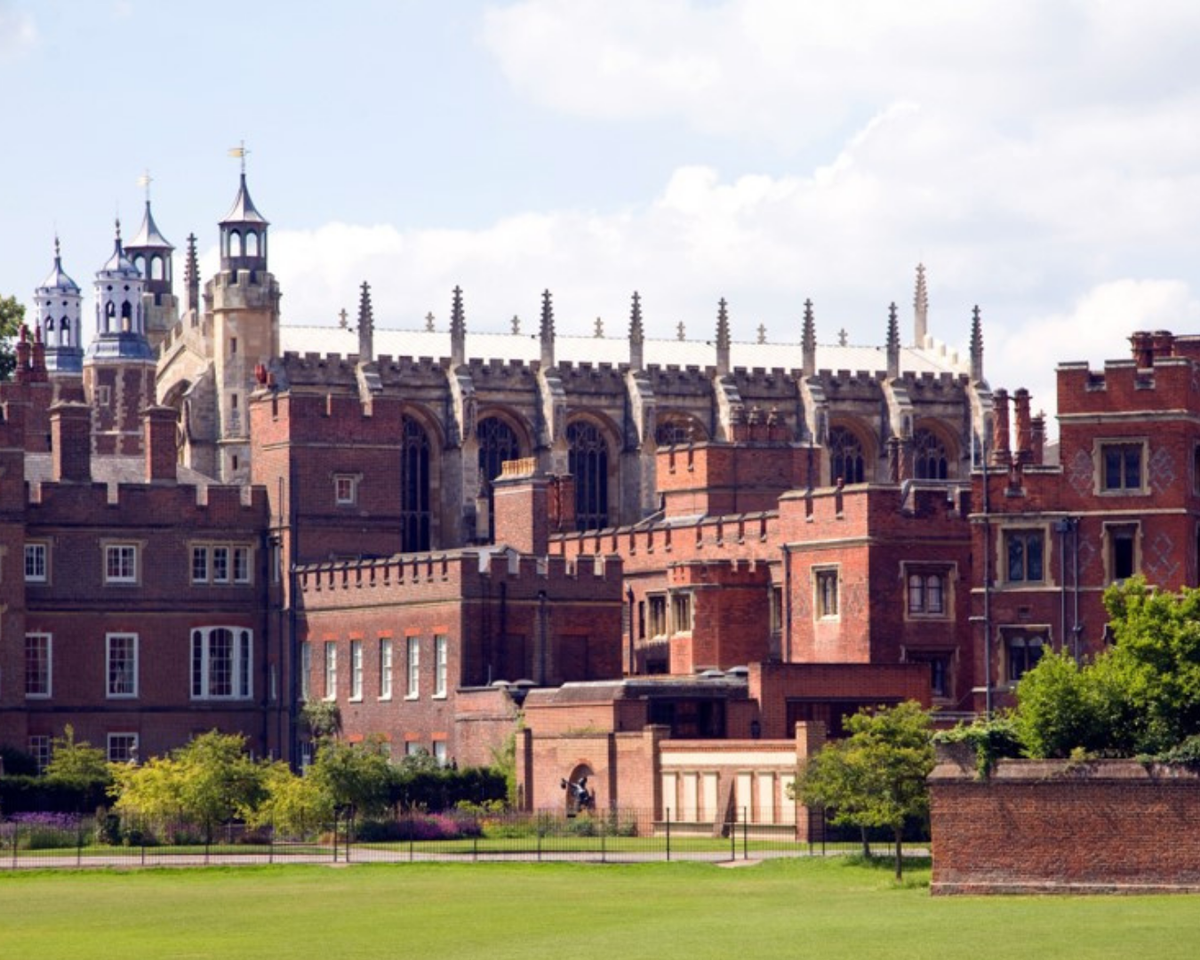
Throughout nearly six centuries, Eton College has stood among the foremost independent schools in the country. Originally founded for 70 poor scholars, it is now home to around 1,350 boys. Entrance is demanding. There are two points of entry, at 13 and 16; with only a very small number of places at 16, this guide focuses on entrance at 13.
Registration
Registration closes on 31 August at the end of Year 5 (previously 30 June). The non-refundable fee is £480, including VAT, and the boy's unabridged birth certificate must be uploaded with the online application. These deadlines are strict, except for the King's Scholarship and Music Awards, which can be applied for in Year 8.
Stage 1: The ISEB Common Pre-Test
In the autumn term of Year 6, all boys sit the ISEB Common Pre-Test in October or November, and Eton also requests a Head Teacher's report. The test comprises four multiple-choice papers, sat online: English, Maths, Verbal Reasoning and Non-Verbal Reasoning. Each boy sits it only once, and the results can be used by every school to which he is registered, not just Eton. Stage 1 outcomes are sent in December, and successful boys go forward to Stage 2 at Eton.
Stage 2: Interview and Online Test
Boys who are successful at Stage 1 come to Eton in the spring or summer term of Year 6 for an individual interview and an online predictive test of academic ability and potential, in groups arranged by age, from mid-January to late April or early May. Results for each assessment group are published in March, May and July, and successful boys receive a Conditional Place.
The Conditional Place
Boys who are successful at Stage 2 receive a Conditional Place, confirmed by passing the King's Scholarship, Common Entrance or Eton Entrance examinations in Year 8. Families with a Conditional Place meet a selection of House Masters during the first and second terms of Year 7 to determine which boarding house is most appropriate for them.
The King's Scholarship
The King's Scholarship runs alongside the ordinary entrance route. The number of vacancies in College varies from year to year, but averages 14. King's Scholarships carry no automatic fee remission. King's Scholars, known as 'collegers' or 'tugs', join a tradition that includes Aldous Huxley, John Maynard Keynes and Sir Robert Walpole.
The examinations for potential King's Scholars are held in late April and/or early May for entry in September. Candidates sit six compulsory papers: English A, English B, Mathematics A, Science Theory, Science Data and General I, and at least three of Mathematics B, General II, History-Geography-Divinity, French, Latin and Greek. Past papers are published on Eton's King's Scholarship page. The scholarship is designed to identify the strongest candidates in the country, and each year excellent boys do not make the cut.
Eton's process is exacting, and the strongest applications are those prepared with time and care. Think Tutors advises families through each stage, from registration and the ISEB Common Pre-Test to the interview, the King's Scholarship and the Year 8 examinations.