
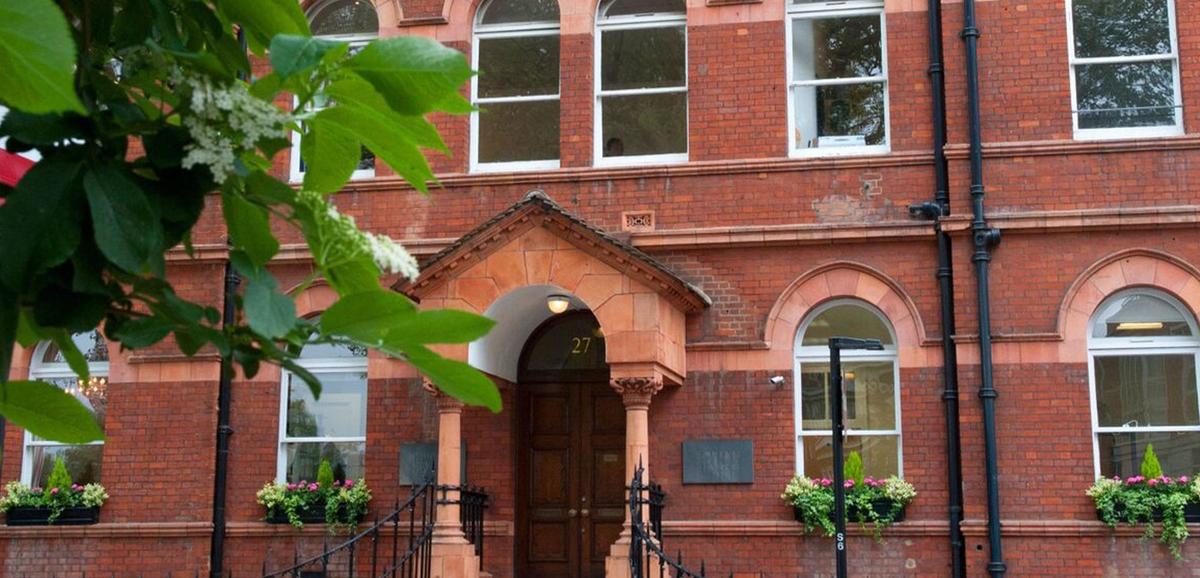
Westminster Under School, the junior school of Westminster School, admits about 60 boys and girls into Year 3 at 7+. For September 2028 entry, registration is open until 30 September 2027; candidates sit written tests in Mathematics, English, Verbal Reasoning and Non-Verbal Reasoning in the autumn of 2027, and a shortlist returns in November for classroom activities and an interview.
Westminster Under School was formed in 1943 as a preparatory school for boys; its senior counterpart, Westminster School, is described on the school’s own site as ‘one of the UK’s leading academic institutions’, with a history dating back almost half a millennium. It has been co-educational at 7+ since September 2026, and girls now join Year 3 alongside boys. As part of this expansion, the school has opened a Pre-Prep and is developing its site, including the new Chapter House building. The 7+ intake will not stay at its present size for long: the school’s Admissions Policy (May 2026) states that the figure of 60 ‘will decrease to around 28 for the September 2029 entry’. Families should also note the school’s own wording on the route onwards: for pupils joining the Under School at 7+, ‘entry to Westminster School is not guaranteed and pupils will be assessed for the 11+ point in Year 6, for suitability of entry to Westminster School in Year 9’.
The school describes its pupils as ‘academic and creative, with a love of knowledge’, and its teaching as ‘thought-provoking and stimulating’, with participation and debate led by enthusiastic teachers. It looks for children with curiosity, enthusiasm and a readiness to learn, who will thrive in an environment that celebrates learning. Places are keenly sought, and competition for entry is significant.
Admission at 7+ follows a structured timeline, beginning up to two years before entry to Year 3. Families are encouraged to familiarise themselves with each stage, as the process is carefully sequenced and deadlines are strictly observed.
Stage One: How Does 7+ Registration Work for 2028 Entry?
For September 2028 entry, registration opened on 1 September 2026 and closes on 30 September 2027. This follows the school’s rule that registration opens on 1 September two years before the intended year of entry and closes on 30 September of the following year; the Admissions Policy gives the same pattern, with 30 September 2026 as the deadline for a September 2027 start. Assessment and interview dates for 2028 entry have not yet been published and are due in the school’s Information Booklet by the end of March 2027.
Registration carries a fee of £300 (including VAT), followed by an acceptance deposit if a place is offered. For 2026–27, fees at the Under School are £11,671 per term (including VAT) for Years 2–8; fees for 2028–29 have not yet been published. In the year before entry, the school runs 7+ Small-Group Tours on a rolling basis. Families are strongly encouraged to attend with their child, as these visits provide a valuable opportunity to see the school in action, meet staff and gain a sense of its ethos, atmosphere and expectations. Further details of each entry point are on the school’s Admissions pages.
Stage Two: What Is in the Westminster Under 7+ Exam?
The first round consists of written tests in Mathematics, English, Verbal Reasoning and Non-Verbal Reasoning, sat by all registered candidates in mid-October of the year before entry on the school’s current pattern. A select group of candidates is then invited back for the second stage. The school says the papers are designed to help it ‘better understand children’s abilities and potential’, and its published outlines are specific: in maths, a sound grasp of place value, the four operations applied to problem solving and mental strategies built on the 2, 4, 5 and 10 times tables; in English, writing such as continuing a story or a diary, careful spelling, punctuation and grammar, and the habit of reading aloud and discussing new vocabulary.
Secure foundations and familiarity with the format allow children to approach the assessments with confidence and show the depth of their thinking. Our guide to 7+ and 8+ exam preparation sets out what each kind of paper tests and a timeline for 2028 entry. Many families sit several 7+ assessments in the same autumn; our guides to St Paul’s Prep School and City Junior School set out their processes.
The school makes every effort to create an informal, child-friendly environment, with children placed in small groups and supported by at least two members of staff for the duration of the exams. That said, the first round remains a competitive stage of the admissions process, and only some of the children who sit the papers are invited to the next stage. Expectations are high, and careful preparation gives children the best chance to show what they can do.
Stage Three: Second Round Assessment
Based on performance in the written assessments, approximately 120 children are invited to return for the second round, which takes place in November. During this stage, children spend part of a day at Westminster Under, taking part in classroom activities and attending an individual interview. Offers follow shortly afterwards, and the deadline for acceptance is usually at the end of January.
Group Activities
Designed to resemble a typical school morning, the session begins with games to help children feel at ease before they join small group activities. There is also time for an outdoor play break and a snack. Throughout the morning, teachers observe how children respond to new challenges, collaborate with peers and settle into the school environment, while also assessing their readiness for Westminster’s academically ambitious environment. This stage is as much about engagement, confidence and overall fit as it is about intellectual ability.
Interview
Each child also has an interview with the Master and another member of the Senior Management Team. Here, they are encouraged to talk about their interests — whether a fascination with dinosaurs, an imaginative flair for storytelling or a keen interest in how things work — as well as their favourite books, hobbies or something they feel particularly proud of. Interviewers look for ‘a spark and a passion’, and the school notes that quiet or shy children are equally enthusiastic when talking about the topics that fascinate them.
The school emphasises that the day is intended to feel ‘as normal and as comfortable as possible’, though families should bear in mind that this remains a competitive stage of the process. Children are expected to engage confidently and express their ideas clearly in both group and interview settings. Practising articulating ideas clearly and engaging in thoughtful discussions at home can make a significant difference.
The Think Tutors Perspective
Entry to Westminster Under School at 7+ is selective, and the demand is easy to understand: as the junior school of Westminster School, it has long attracted families seeking both intellectual rigour and tradition. Girls have been eligible at 7+ since September 2026, so the field now includes both boys and girls. Admission at 7+ allows pupils to establish themselves early within the Westminster community, building foundations that support long-term success — while families should keep in mind that the move to Westminster School itself is decided by assessment in Year 6.
Westminster Under is deliberate in how it selects pupils. Admission is not simply a matter of awarding places to those with the highest test scores. Instead, the school looks for children with strong academic grounding and clear potential — those who will thrive in, and contribute to, a high-achieving environment. In practice, this means valuing reasoning skills, creativity and a real eagerness to learn, alongside a secure grasp of the core knowledge and skills expected at this level. A child who combines intellectual promise with curiosity, ambition and the ability to engage thoughtfully with others will stand out.
Our 7+ admissions tutors plan preparation around each stage of Westminster Under entry, from the October papers to the November interview, building the skills and confidence on which every part of the process draws. A spark and a passion are easiest to see in a child who has had the chance to practise sharing them.